
How Artificial Intelligence Is Changing the Way We Think, Work, and Create
0
 February 18, 2026
 February 18, 2026


# How Artificial Intelligence Is Changing the Way We Think, Work, and Create
Artificial Intelligence is no longer a distant concept reserved for science fiction or research labs. It has quietly woven itself into our daily lives—suggesting what we watch, helping us write emails, navigating our routes, and even shaping how we think. What makes this moment unique is not just the speed of AI’s advancement, but the depth of its influence on human cognition, creativity, and work.
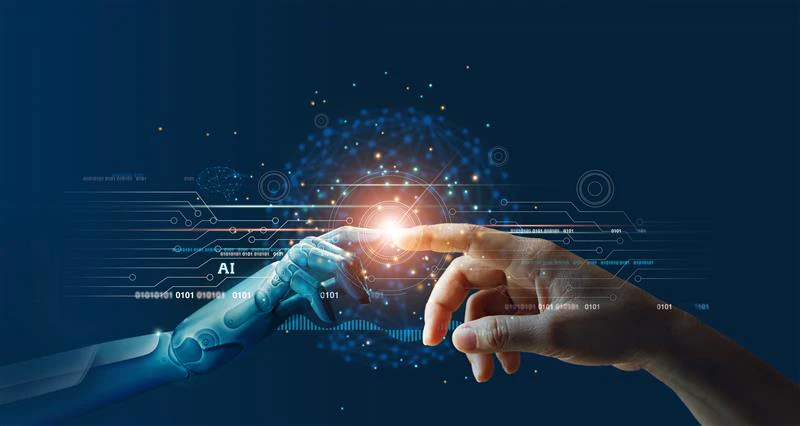
We are not merely *using* AI anymore. We are *collaborating* with it. This article explores how AI is reshaping the way we think, work, and create—and why learning to coexist with it thoughtfully may be one of the most important skills of our time.
---
## From Tools to Thinking Partners
For most of history, technology has acted as an extension of human muscle: machines helped us lift more, move faster, and produce at scale. AI is different. It extends the *mind*.
Language models like **OpenAI’s** **ChatGPT**, recommendation systems from **Google**, and AI copilots integrated into tools by **Microsoft** do more than automate tasks—they assist in decision-making, brainstorming, and problem-solving.
This shift has changed our relationship with technology. Instead of asking, *“What can this tool do?”* we now ask, *“How can this tool think with me?”*
That question carries both promise and responsibility.
---
## How AI Is Changing the Way We Think
One of the most subtle effects of AI is cognitive offloading—the act of delegating mental effort to machines. Just as calculators changed how we approach arithmetic, AI is changing how we approach writing, research, and even reflection.
### Benefits
* **Faster ideation:** AI helps generate starting points, reducing blank-page anxiety.
* **Broader perspective:** Models trained on vast datasets can surface viewpoints we might not consider.
* **Mental efficiency:** Routine thinking is automated, freeing cognitive space for higher-level reasoning.
### Risks
* **Shallow thinking:** Over-reliance can reduce deep engagement.
* **Confirmation bias:** Poorly guided prompts may reinforce existing beliefs.
* **Loss of skill:** Like any unused muscle, critical thinking can weaken.
The challenge isn’t avoiding AI—it’s using it *deliberately*. The quality of our thinking increasingly depends on the quality of our questions.
---
## Redefining Work in the Age of AI
AI is not replacing work wholesale; it is reshaping roles.
Instead of eliminating jobs outright, AI is changing *what humans are paid to do*. Tasks that are repetitive, predictable, and rule-based are increasingly automated. In their place, human value concentrates around:
* Judgment
* Empathy
* Creativity
* Strategy
* Ethical reasoning
### The Rise of Hybrid Roles
We are seeing the emergence of new job identities:
* Designers who co-create with generative tools
* Developers who supervise AI-generated code
* Writers who edit, refine, and add human voice
* Managers who interpret AI insights rather than produce raw data
In this new landscape, knowing *how to work with AI* becomes as important as domain expertise.
---
## Creativity: Threatened or Transformed?
Few areas have sparked as much debate as AI-generated art, music, and writing. Critics argue that AI threatens originality. Supporters claim it democratizes creativity.
The truth lies somewhere in between.
AI can generate content quickly—but meaning still comes from humans. Creativity is not just output; it’s intention, context, and emotional resonance. AI can remix patterns, but humans decide *why* something should exist.
Think of AI as:
* A sketch assistant for artists
* A melody generator for musicians
* A drafting partner for writers
The creative edge belongs to those who guide the tool, not those who fear it.
---
## Learning Becomes Lifelong—and Nonlinear
AI is accelerating the half-life of skills. What you learned five years ago may already be outdated.
In response, learning is becoming:
* **Continuous:** Micro-learning replaces one-time education.
* **On-demand:** AI tutors answer questions instantly.
* **Personalized:** Content adapts to individual pace and style.
This shift favors curiosity over credentials. The most resilient individuals are not those who know the most—but those who can learn, unlearn, and relearn quickly.
---
## Ethical Questions We Can’t Ignore
With power comes responsibility. AI raises serious ethical concerns that society must confront:
* Who owns AI-generated content?
* How do we prevent bias baked into algorithms?
* What happens when AI decisions affect livelihoods or justice?
* How do we ensure transparency and accountability?
These are not technical problems alone—they are human ones. Engineers, policymakers, educators, and everyday users all play a role in shaping AI’s future.
Ignoring ethics does not stop progress; it only ensures progress happens without guidance.
---
## The Human Advantage in an AI World
Ironically, as machines become more intelligent, *human qualities* matter more.
AI struggles with:
* Genuine empathy
* Moral judgment
* Purpose-driven thinking
* Lived experience
Our advantage lies in what cannot be fully automated: meaning, values, and connection. The future is not about humans versus machines—it’s about humans *amplified* by machines.
---
## How to Thrive Alongside AI
To adapt effectively:
1. **Learn how AI works** (at a conceptual level)
2. **Use it as a collaborator**, not a crutch
3. **Strengthen uniquely human skills**
4. **Ask better questions**
5. **Stay ethically aware**
Those who resist AI completely risk irrelevance. Those who surrender thinking to it risk dependency. Balance is the path forward.
---
## Conclusion: Choosing the Future We Want
Artificial Intelligence is not destiny—it is design.
The way we integrate AI into our lives will determine whether it becomes a tool for empowerment or a source of disengagement. Used wisely, it can elevate human potential, unlock creativity, and free us to focus on what truly matters.
The future belongs not to those who fear intelligent machines—but to those who learn how to think *with* them.
And that future is already here.
This article explores how AI is reshaping the way we think, work, and create—and why learning to coexist with it thoughtfully may be one of the most important skills of our time.
---
## From Tools to Thinking Partners
For most of history, technology has acted as an extension of human muscle: machines helped us lift more, move faster, and produce at scale. AI is different. It extends the *mind*.
Language models like **OpenAI’s** **ChatGPT**, recommendation systems from **Google**, and AI copilots integrated into tools by **Microsoft** do more than automate tasks—they assist in decision-making, brainstorming, and problem-solving.
This shift has changed our relationship with technology. Instead of asking, *“What can this tool do?”* we now ask, *“How can this tool think with me?”*
That question carries both promise and responsibility.
---
## How AI Is Changing the Way We Think
One of the most subtle effects of AI is cognitive offloading—the act of delegating mental effort to machines. Just as calculators changed how we approach arithmetic, AI is changing how we approach writing, research, and even reflection.
### Benefits
* **Faster ideation:** AI helps generate starting points, reducing blank-page anxiety.
* **Broader perspective:** Models trained on vast datasets can surface viewpoints we might not consider.
* **Mental efficiency:** Routine thinking is automated, freeing cognitive space for higher-level reasoning.
### Risks
* **Shallow thinking:** Over-reliance can reduce deep engagement.
* **Confirmation bias:** Poorly guided prompts may reinforce existing beliefs.
* **Loss of skill:** Like any unused muscle, critical thinking can weaken.
The challenge isn’t avoiding AI—it’s using it *deliberately*. The quality of our thinking increasingly depends on the quality of our questions.
---
## Redefining Work in the Age of AI
AI is not replacing work wholesale; it is reshaping roles.
Instead of eliminating jobs outright, AI is changing *what humans are paid to do*. Tasks that are repetitive, predictable, and rule-based are increasingly automated. In their place, human value concentrates around:
* Judgment
* Empathy
* Creativity
* Strategy
* Ethical reasoning
### The Rise of Hybrid Roles
We are seeing the emergence of new job identities:
* Designers who co-create with generative tools
* Developers who supervise AI-generated code
* Writers who edit, refine, and add human voice
* Managers who interpret AI insights rather than produce raw data
In this new landscape, knowing *how to work with AI* becomes as important as domain expertise.
---
## Creativity: Threatened or Transformed?
Few areas have sparked as much debate as AI-generated art, music, and writing. Critics argue that AI threatens originality. Supporters claim it democratizes creativity.
The truth lies somewhere in between.
AI can generate content quickly—but meaning still comes from humans. Creativity is not just output; it’s intention, context, and emotional resonance. AI can remix patterns, but humans decide *why* something should exist.
Think of AI as:
* A sketch assistant for artists
* A melody generator for musicians
* A drafting partner for writers
The creative edge belongs to those who guide the tool, not those who fear it.
---
## Learning Becomes Lifelong—and Nonlinear
AI is accelerating the half-life of skills. What you learned five years ago may already be outdated.
In response, learning is becoming:
* **Continuous:** Micro-learning replaces one-time education.
* **On-demand:** AI tutors answer questions instantly.
* **Personalized:** Content adapts to individual pace and style.
This shift favors curiosity over credentials. The most resilient individuals are not those who know the most—but those who can learn, unlearn, and relearn quickly.
---
## Ethical Questions We Can’t Ignore
With power comes responsibility. AI raises serious ethical concerns that society must confront:
* Who owns AI-generated content?
* How do we prevent bias baked into algorithms?
* What happens when AI decisions affect livelihoods or justice?
* How do we ensure transparency and accountability?
These are not technical problems alone—they are human ones. Engineers, policymakers, educators, and everyday users all play a role in shaping AI’s future.
Ignoring ethics does not stop progress; it only ensures progress happens without guidance.
---
## The Human Advantage in an AI World
Ironically, as machines become more intelligent, *human qualities* matter more.
AI struggles with:
* Genuine empathy
* Moral judgment
* Purpose-driven thinking
* Lived experience
Our advantage lies in what cannot be fully automated: meaning, values, and connection. The future is not about humans versus machines—it’s about humans *amplified* by machines.
---
## How to Thrive Alongside AI
To adapt effectively:
1. **Learn how AI works** (at a conceptual level)
2. **Use it as a collaborator**, not a crutch
3. **Strengthen uniquely human skills**
4. **Ask better questions**
5. **Stay ethically aware**
Those who resist AI completely risk irrelevance. Those who surrender thinking to it risk dependency. Balance is the path forward.
---
## Conclusion: Choosing the Future We Want
Artificial Intelligence is not destiny—it is design.
The way we integrate AI into our lives will determine whether it becomes a tool for empowerment or a source of disengagement. Used wisely, it can elevate human potential, unlock creativity, and free us to focus on what truly matters.
The future belongs not to those who fear intelligent machines—but to those who learn how to think *with* them.
And that future is already here.


